The Regional Network for Forgiveness and Reconciliation in the Arab World has continued to strengthen its role as a dynamic platform for advancing peacebuilding and reconciliation efforts across the Arab region. Through a series of strategic meetings, knowledge-sharing activities, and collaborative initiatives, the network has demonstrated its commitment to responding to regional challenges while fostering collective action among its members.
At the governance level, the network convened two administrative committee meetings focused on updating its strategic plan for the upcoming phase and preparing for an anticipated in-person gathering. These discussions also emphasized expanding the network’s membership base and strengthening internal structures. As part of this effort, the network activated its thematic committees, assigning each administrative committee member to oversee and guide the work of a specific committee, thereby enhancing coordination and institutional effectiveness.
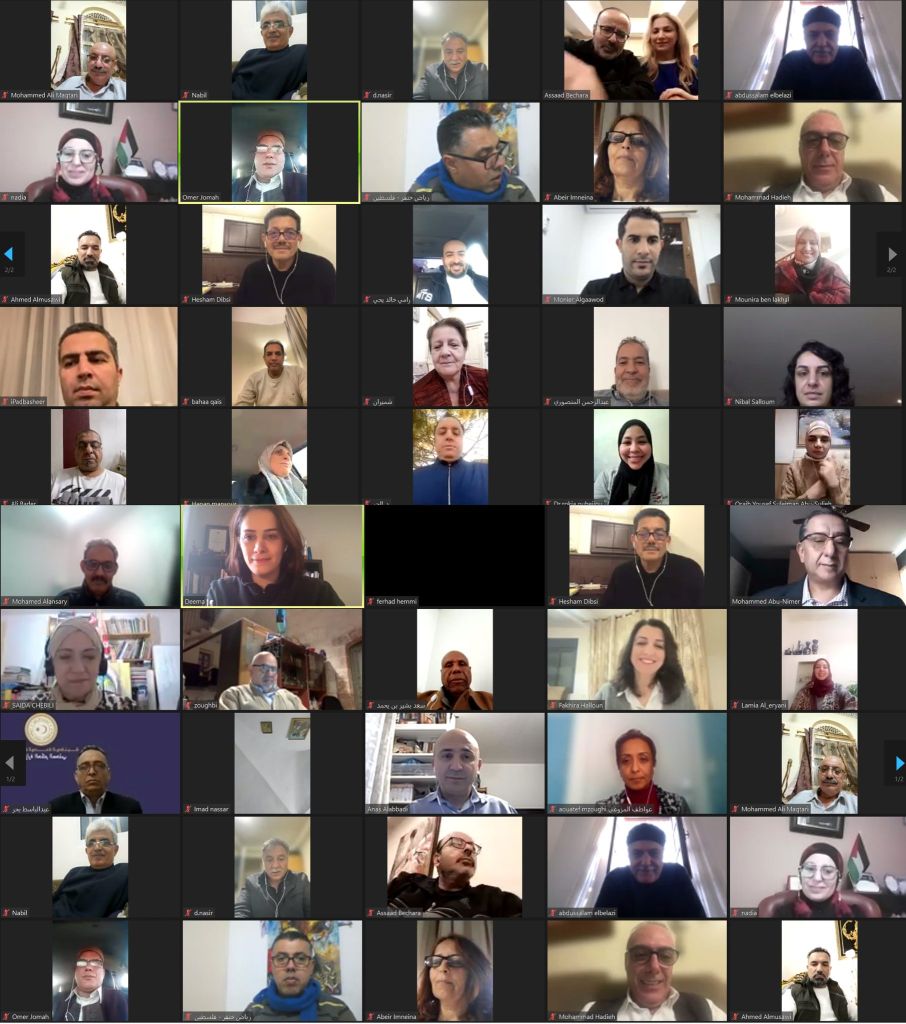
In response to unfolding regional developments, the network organized five general meetings addressing critical issues. One meeting provided a space for members from Libya and Morocco to share firsthand insights following the floods and earthquake, highlighting emerging humanitarian challenges and post-crisis realities. Another meeting focused on the war on Gaza, resulting in a collective statement calling for an immediate ceasefire and engagement with relevant institutions to advocate for peace. The network also welcomed new members, including the addition of three individuals and the introduction of a new member whose engagement has already contributed to planning women’s empowerment sessions, supporting colleagues in Tunisia, and initiating the development of three knowledge papers. The network further marked its first anniversary, creating an opportunity to reflect on achievements, exchange experiences, and identify priorities for future growth.
Knowledge development remained a central pillar of the network’s work, with eight lectures and training sessions covering key themes in reconciliation and peacebuilding. These included learning from reconciliation efforts in Iraq, particularly between Arab and Yazidi communities in Sinjar, as well as four training sessions in Libya on emergency planning and response using gender-sensitive approaches. Additional sessions explored experiences from Syria and Palestine on reintegrating women and children affected by extremism, examined reconciliation and forgiveness frameworks, and analyzed conflict dynamics in Yemen alongside women’s roles in peace processes. The network also facilitated discussions on women’s political participation across the Arab world, the positive role of religious diversity in reconciliation, and the barriers and opportunities for women’s engagement in reconciliation processes.
Collaboration was another key area of impact, with the network contributing to six joint initiatives. These efforts included training and dialogue sessions on women’s empowerment in peacebuilding, particularly in Yemen, Libya, and Jordan, led by network members and enriched by regional experiences. The network also contributed to practical recommendations for promoting the principles of the Human Fraternity Document through education and media, and engaged with the Union for the Mediterranean in shaping a forward-looking agenda on women’s roles, gender issues, and the implications of artificial intelligence. Additional activities included a screening and discussion of The Unexpected Peace as a tool for raising awareness on reconciliation, and participation in a reconciliation conference in Tunisia focused on mediation practices and shared learning.
On the knowledge production and visibility front, the network achieved notable outreach through the publication of multiple articles and media features highlighting its launch, activities, and expert contributions. This included coverage of specialized webinars and lectures addressing the development of reconciliation and forgiveness concepts in the Arab region.
Together, these efforts reflect the network’s growing influence as a platform for dialogue, learning, and collaboration. By prioritizing inclusivity and amplifying the roles of women and youth, the network continues to contribute meaningfully to building sustainable and just peace across the region.